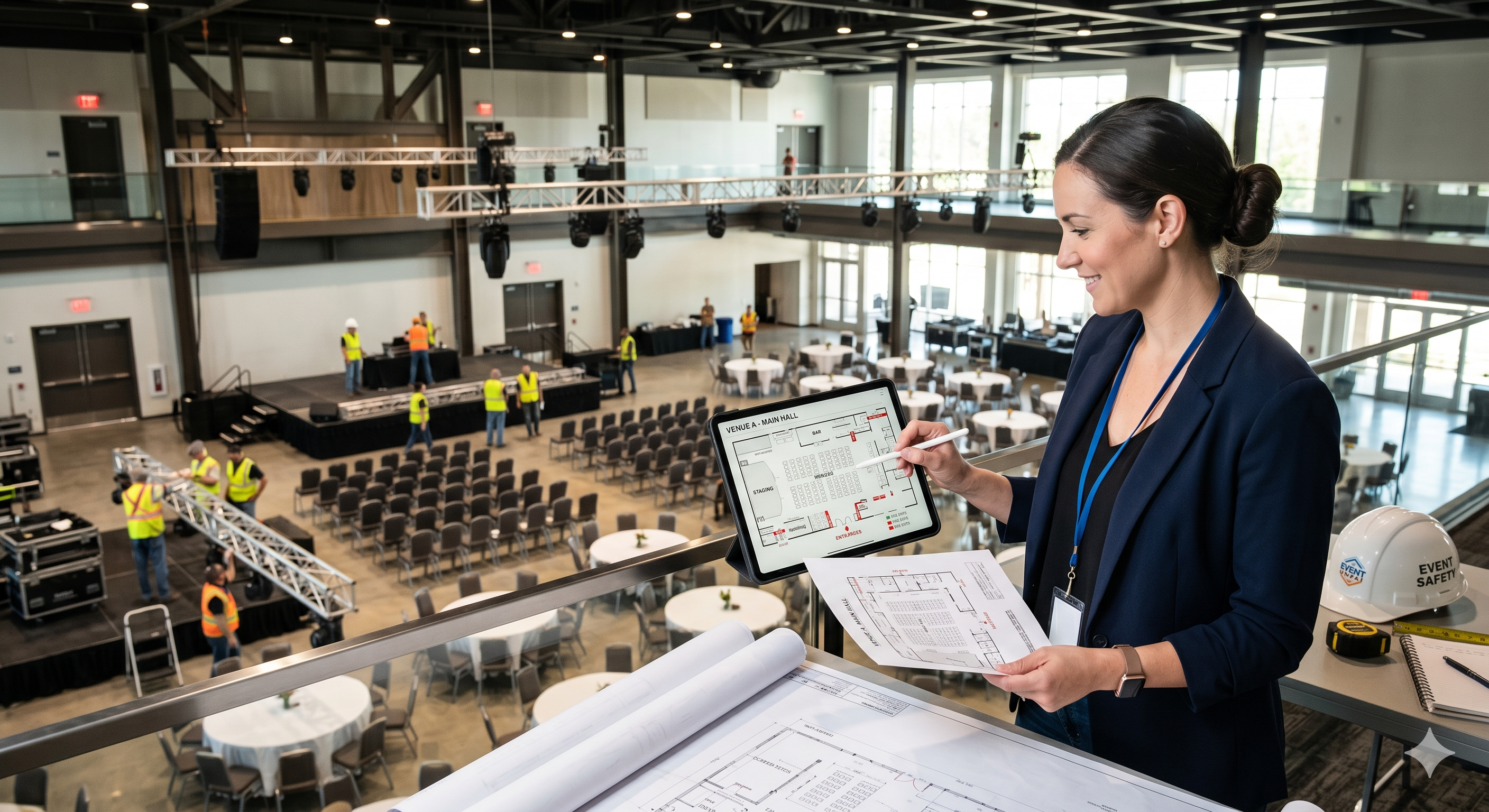
The physical blueprint of an event is its safety foundation. When planning events across Maharashtra's hubs like Pune, Mumbai, or Latur, selecting a venue is only the first step. Planners must translate empty halls or open grounds into functioning mini-cities. This layout guide breaks down the essential technical aspects of zoning, overhead truss calculations, power grids, and crowd dynamics needed to deliver a safe, compliant, and seamless experience.
Too often, event layouts are drafted purely for visual balance, overlooking the physical demands of weight tolerances, electricity loads, and emergency exit routes. To maintain site safety, planners must work closely with structural and electrical engineers to align the creative vision with physical site limits.
1. Overhead Rigging & Load Metrics
Modern stages carry tons of equipment: heavy line-array speakers, LED screens, and moving lighting rigs. Suspension of this gear requires an understanding of rigging mathematics. Key variables include:
- Point Loads: The specific weight concentration resting on a single rigging block.
- Uniform Distributed Loads (UDL): The spread of load evenly along a truss span to prevent sagging.
- Wind-Load Calculations: For outdoor domes or hangars, calculations must factor in localized wind vectors to secure temporary structures against gusts.
"Safety calculations must occur in the pre-production phase. Once the trussing goes up, modifying structural configurations on-site becomes costly and hazardous."
2. Electrical Power Matrix Coordination
Blackouts can disrupt corporate summits and live concert productions. To secure uninterrupted power, layout designers must implement a balanced power matrix. The total kilowatt (kW) demand must be calculated and divided into three separate power grids:
Grid 1: Clean Sound Power
Dedicated to sound consoles, RF receivers, and processors. This grid must remain free from electric noise generated by LED walls or motors.
Grid 2: Lighting & LED Walls
Supports high-amperage lights, screen walls, and projectors. High-voltage cables must be routed along heavy cable ramps.
Grid 3: Special FX & Auxiliary
Powers pyrotechnics, smoke machines, and ventilation. Isolated circuits prevent feedback spikes from resetting AV consoles.
3. Fire Safety, Emergency Corridors, & The Gating Ratio
Crowd management requires exit route planning. The layout must define clear boundaries: stage clearance zones, audience seating grids, control booths, and service areas.
Planners must design exit gates based on the **Gating Ratio** (total attendees divided by the width of exits). Every temporary installation must leave exit pathways clear, ensuring evacuation routes are open and visible. Flame-retardant materials should be used for all stage drapes and temporary walls, backed by localized fire-safety equipment.
4. Visual Sightlines & Sound Mapping
A technically sound layout also enhances the attendee experience. Visual sightlines must be calculated to ensure that even guests at the far edges of the seating plan have an unobstructed view of the main presentation.
Acoustic design should direct sound towards the audience, avoiding direct reflections off flat walls that can cause echo. Using delayed speaker columns ensures clear sound delivery from the front row to the back row, maintaining consistent sound quality throughout the venue.
Partnering with DR Events for Safe Execution
Managing complex layout safety requires close attention to detail and local engineering expertise. With operational teams in Pune, Mumbai, and Latur, DR Events handles venue compliance, structural safety checks, and vendor coordination directly.
Whether you are planning a corporate conference in Pune, a large-scale exhibition in Mumbai, or a public summit in Latur, our production team handles all calculations, zoning plans, and safety approvals, ensuring your event is built to code.